

Determining the Total Cost of Ownership (TCO) for a web application requires an analysis of architectural complexity, data residency requirements, and API orchestration needs. Initial capital expenditure is driven by the selection of a monolithic vs. microservices foundation and the depth of the CI/CD pipeline automation. Agilie’s engineering audits indicate that high-concurrency environments utilizing containerization (Docker/Kubernetes) and cloud-native services demand a specialized DevSecOps investment but significantly reduce long-term operational overhead. This technical roadmap serves as a benchmark for stakeholders calculating ROI based on functional depth and infrastructure scalability.
According to Clutch, 252,000 websites are developed daily, which underlines that to stay competitive, organizations should have their own website. The average cost of a web application MVP ranges from $15,000 to $35,000+, but it’s important to consider complexity, development team (in-house or outsourcing), and the specific industry requirements. For instance, specialized B2B solutions like fintech platforms or ERP modules often require more rigorous data integrity and compliance layers. If you are specifically planning a financial management tool, you should examine the custom accounting app development costs, as these platforms involve unique architectural demands such as automated tax calculations, multi-currency support, and audit trail logging that exceed the complexity of standard web applications.
-
The final cost of web app development is determined by its complexity, development time, and the niche that requires standard/robust security measures.
-
Custom business logic, external integrations, and the need for scalability are central drivers that influence development time and final costs.
-
A strategic cost-saving approach includes a discovery phase for scope definition, MVP development for validating the core idea, and open-source technologies to save money on license fees.
What Influences Web App Development Cost the Most?
In order to answer the question of how much does it cost to build a web app, it’s important to consider the combination of tech complexity in response to evolving market demands, regulatory overhead for a specific industry, team selection, and UI/UX design approach.
How App Complexity Shapes the Final Price
App complexity is the first central cost driver for web application building, as the feature set and its sophistication level will affect development time and personnel involved. Let’s discuss the main drivers of product complexity.
Features and Business Logic
The number of features, including user profiles, chat, payment processing, and dashboards, is a direct factor that influences the increase in the codebase and requires a longer development timeline.
If simple CRUD operations are cost-effective, complex business logic requires proprietary algorithms, custom recommendation engines, or an advanced pricing model demands a more in-depth approach to coding, leading to an increase in time and rigorous testing, provoking a cost increase.
Technical and Architectural Requirements
Integrations represent secure connections of the app with external services and third-party APIs, including Stripe, Salesforce, or other external databases.
Performance and scalability are other factors that shape the cost. The web application depends on a more complex backend architecture, such as microservices and specialized databases, required to handle thousands of concurrent users in real-time without compromising the speed of performance.
Building components from scratch with highly customized libraries or implementing unique backend stacks will demand more time investment compared to using standard, off-the-shelf tools or templates.
Why Business Niche and Regulations Matter
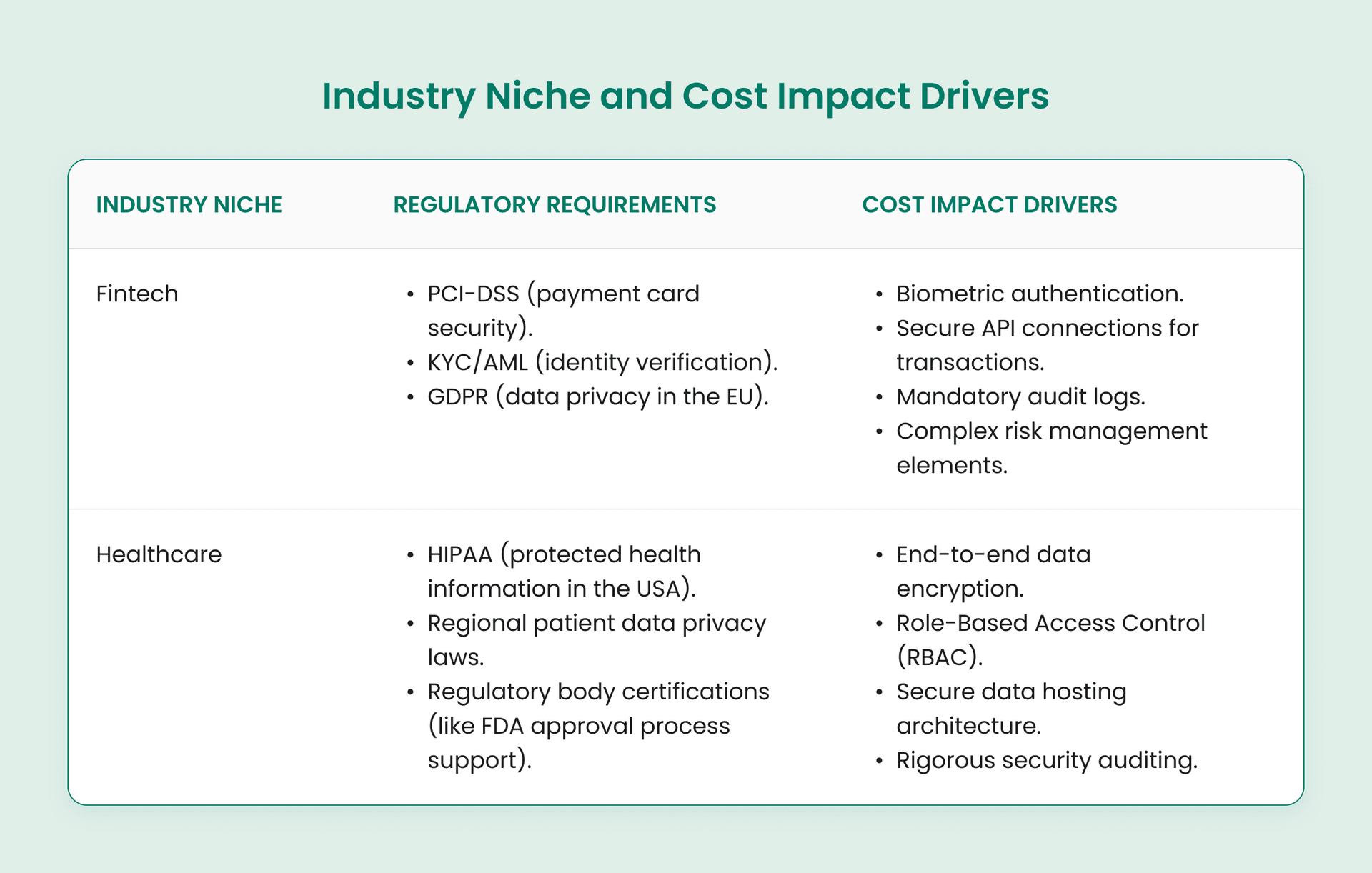
The specific industry niche, such as fintech or healthcare, represents one of the central cost drivers because it requires regulatory and security emphasis for web applications.
Compliance requirements substantially influence the project’s scope and complexity of web development services because integrating complex elements like advanced encryption and data protocols increases development times, requiring robust QA and security auditing. These lead to higher financial input for web app development.
Industry Niche and Cost Impact Drivers
Developer Location: US vs. Europe vs. Eastern Europe
The geographic area of the development team is a significant cost-determining factor, as it’s about the hourly rate of developers. Despite the in-house team or outsourcing selection, the rate is applied to the overall development time and presents a major percentage of the project’s final cost.
High-Cost Regions
The North American region shows the highest hourly rate for web development, ranging from $100 to $180+, presenting high work quality and co-location, which implies that the stakeholders don’t experience a significant hour difference, while in-person contact simplifies the overall development process.
Middle-Cost Regions
The hourly rate typically ranges from $70 to $150+ in the areas of the EU and the UK. These regions offer access to a high-quality talent pool with robust technical skills. Their value includes strong legal and IP protection, English proficiency, and optimal time zone differences.
Low-Cost Regions
The hourly rate for low-cost areas like Eastern Europe, Latin America, and Asia can range from $30 to $70+ and provides strong technical expertise rooted in the educational system. Businesses tend to search for countries for outsourcing software development, as low-cost regions reduce overall costs while preserving high quality with effective synchronous and asynchronous communication despite time zone differences.
How Design and UX Affect Your Budget
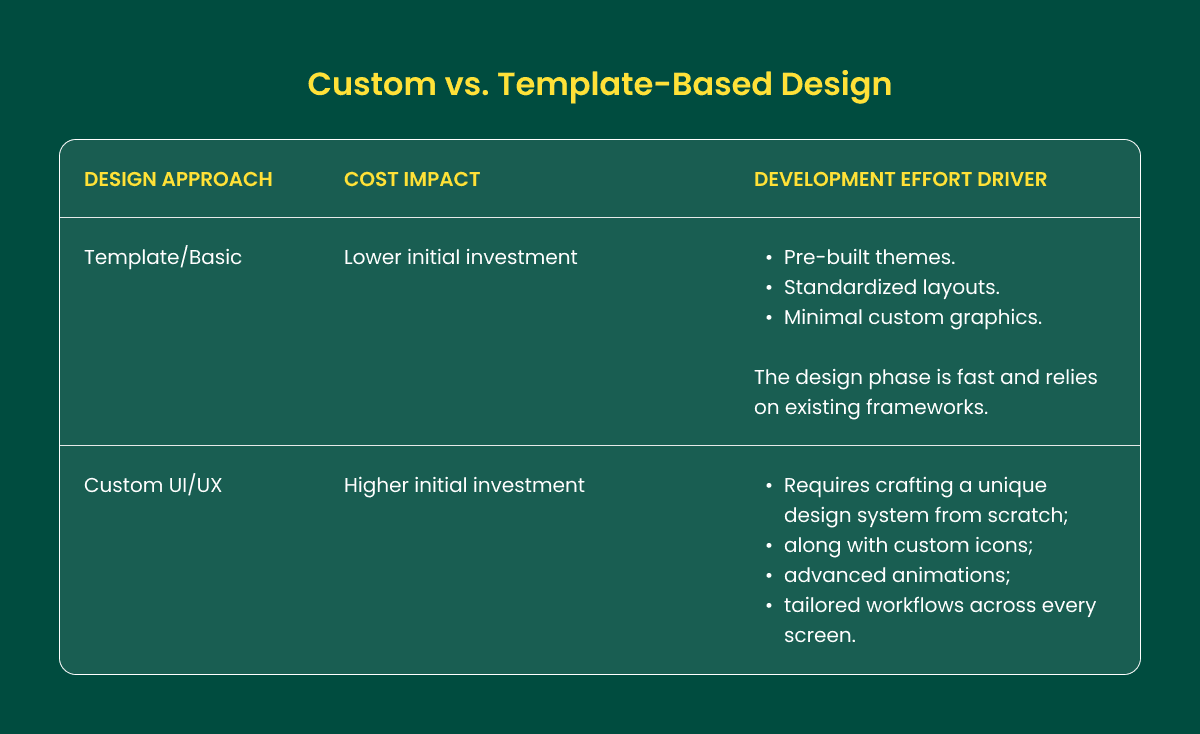
The investment in UI/UX design affects web app development costs as it determines the overall workflow, ease of use, and user engagement. Complex and custom designs require more time and specialized skills compared to the template-based solutions.
Custom vs. Template-Based Design
Deadline Pressure and Scope Creep Risks
Deadline pressure is a critical management risk factor because it inherently affects the development process. The time-sensitive alterations at the late stage of the development process can require increased investment in labor costs, while intensifying the technical debt.
Scope creep refers to the uncontrolled expansion of the project requirements after the initial scope is set, which leads to a budget overrun. Each unmanaged feature request or change leads to the accumulation of person-hours for design, coding, and testing. Developers can miss deadlines, while the budget limits can be exceeded since the original budget and timeline are not adjusted.
What’s Included in a Web App Budget?
A comprehensive web application budget goes beyond coding hours, time, and materials involved but encompasses the following categories: discovery phase, ongoing QA expenses, and post-launch support, all seasoned by the specialized team roles that affect the labor costs.
The Discovery Phase: Why It’s Critical for Saving Money
The discovery phase is a critical, not an optional, pre-development phase, as it involves an in-depth analysis and planning before the actual coding, enabling the business and the outsourcing team to detect what exactly should be included. This promotes bypassing the risk of implementing cost-demanding alterations within the development cycle.
Scope Definition
The discovery phase’s primary function is to clearly define the project’s scope, setting the detailed requirements, features, and outcomes. This in-depth documentation reduces the risk of scope creep, the primary cause of budget overruns. This enables the team to produce a highly accurate budget estimate within a selected outsourcing model to prevent vague costs.
Idea Validation
The identified phase validates business goals to ensure the project responds to the overall market needs and unique business objectives. If confirmed early, the team avoids spending time on developing unnecessary, nice-to-have elements or fixing flaws, reducing costs.
Definition of System Structure
The discovery phase can influence cost reduction through early establishment of the technical architecture, defining the tech stack, system structure, and integration elements. This decision bypasses code rewriting that might have occurred because of weak architectural choices.
 Explore the essence of a discovery phase and what should be included in project analysis.
Development Team Roles and Responsibilities
The total budget will be directly influenced by the size and composition of the development team, as, based on the project complexity, it influences the hours spent and the materials involved. Web app development has to consider hourly rates based on the IT professionals’ roles and seniority levels, so outsourcing is highly recommended to maintain quality while preserving costs.
Project Manager (PM)
The project manager is responsible for supervising the development process, managing the timeline, budget, and resources. They ensure that delivery occurs on time and within the budget by managing communication, risk mitigation, scheduling, and team coordination.
UI/UX Designer
The UI/UX professional focuses on crafting the user journey, wireframes, prototypes, and user flows (UX components) to make the web application intuitive. Then, they address visual aesthetics, color palettes, typography, and custom icons to deliver high-fidelity mockups (UI components).
Backend Developer
The backend developer builds the core server-side logic, APIs, databases, and supporting infrastructure, while maintaining security, performance, and integrations. This role is the largest cost driver for complex applications, especially for those that require high scalability or business logic.
Frontend Developer
The frontend developer codes the client-side interface, implementing the UI/UX design and ensuring the application is responsive and performs optimally across all devices. This role requires a high budget input for web applications, featuring complex user interfaces, real-time updates, and robust micro-interactions.
Full-Stack Developer
Full-stack developers are skilled in covering both frontend and backend functions. Integrating a full-stack engineer can be a cost-effective strategy for MVPs or small projects, yet they cannot offer the same level of in-depth expertise in both frontend and backend.
QA Engineer
The role of a QA engineer is to perform different testing types to identify bugs and verify that all requirements are fulfilled. While in-depth QA sessions increase the upfront cost, they play a central role in delivering a stable product when it’s deployed to production, since they prevent post-launch bug fixes.
DevOps Engineer
The DevOps engineer manages deployment pipelines, cloud infrastructure, monitoring tools, and automation of the development process (CI/CD) to ensure the app can be deployed and scaled reliably. DevOps engineers contribute to the budget by optimizing the team’s workflow while ensuring the project’s high scalability and effective performance.
Testing and Post-Launch Support Costs
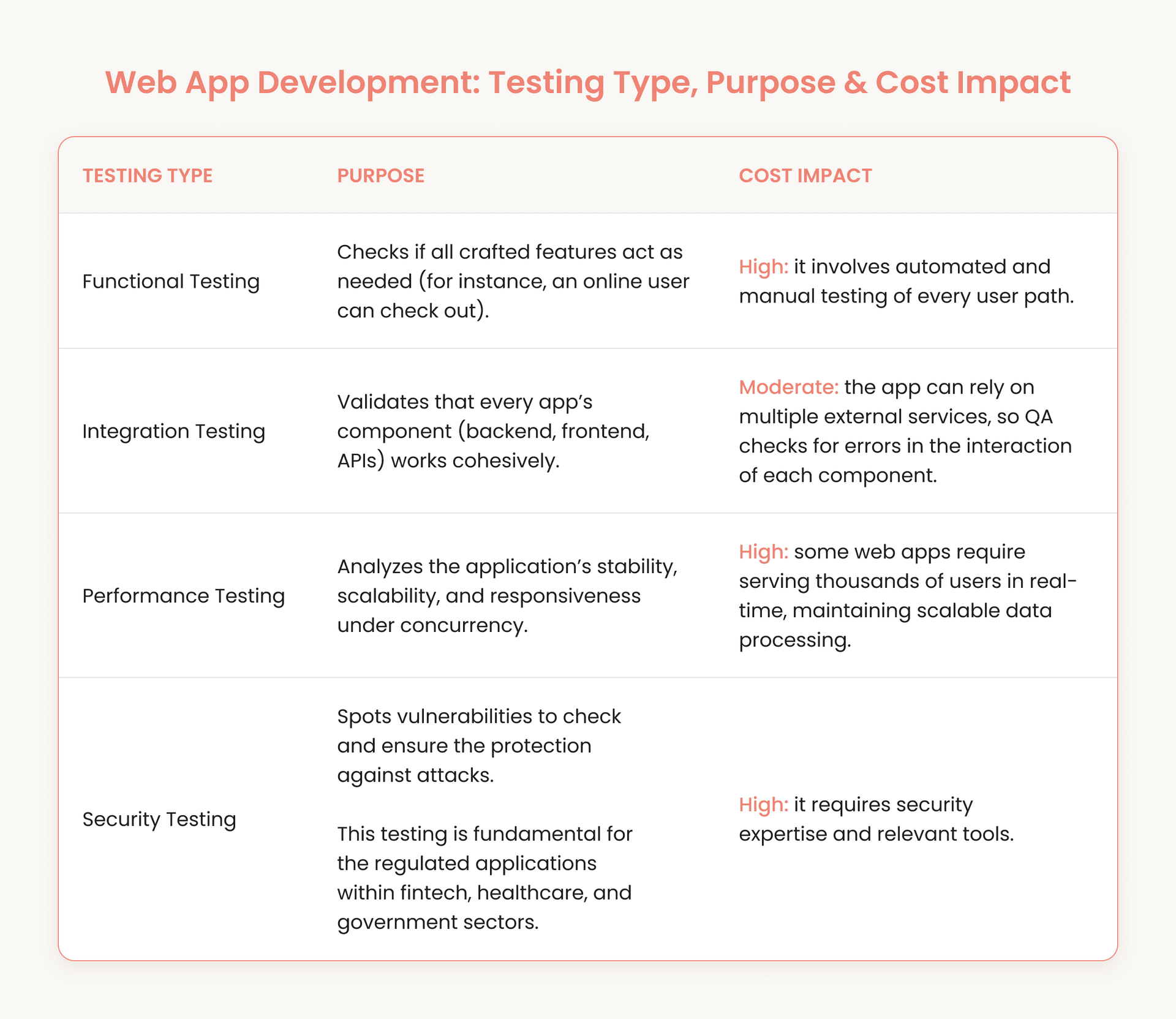
While business representatives focus mainly on the development hours, it’s critical to consider QA, testing, and post-launch support, as they prevent costly emergency fixes before and after project deployment.
Web App Development: Testing Type, Purpose & Cost Impact
A web project is a living product that requires continuous, ongoing post-launch investment to remain competitive and functional. This maintenance phase shifts from the fixed-price model to the monthly retainer variant.
The Post-Launch Costs Include:
-
Bug Fixing & Patch Updates: businesses allocate funds to fix critical issues and unexpected bugs that occur during real-world app use.
-
Security Updates: regular updates of third-party libraries and server software are central to patch discovered vulnerabilities to protect user data.
-
Infrastructure Expenditures: represent monthly costs, including hosting fees for AWS or Azure and database services.
-
Monitoring & Optimization: DevOps engineers keep monitoring the app’s health, analyzing logs, and optimizing database queries and infrastructure.
Web App Pricing by Complexity
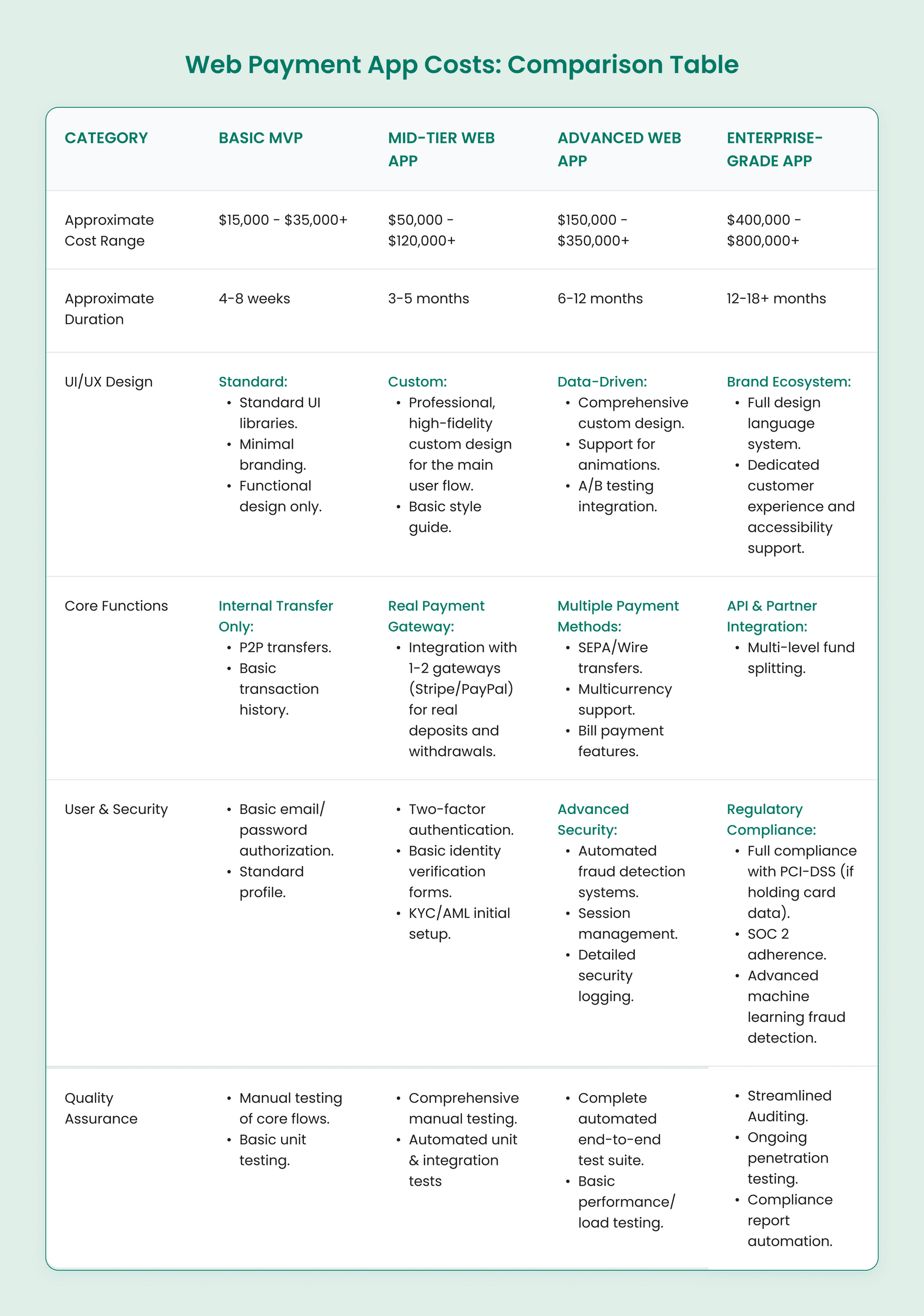
The cost to develop a web application depends on the complexity level mentioned above and practical business needs, as the differences in requirements will affect the overall development timing and determine the feature set necessary to include. In the comparison table below, we discussed the approximate price range for the web payment application for different business sizes.
Web Payment App Costs: Comparison Table
How to Lower Your Web App Development Cost Without Compromising
Lowering costs for web applications requires a well-thought-out approach to development, from MVP to open-source stack selection and scalability. Don’t overlook team cooperation, as the seniority level and location will directly influence development time, resulting in cost savings or overrun.
Start Lean with an MVP
MVP lowers development time, effort, and overall costs while bringing to the table validation of core assumptions in real-time. Investment in the MVP development shortens time to market, as the launch is based on the reliable data gained from lean learning on basic product features compared to the MVP-absent web app development based only on assumptions that could lead to costly reworks.
Use Open-Source Tech and Proven Frameworks
One of the central advantages of using open-source technologies is the removal of licensing expenses. Unlike proprietary programs that require high upfront costs or ongoing fees per user or server, OSS like Linux, PostgreSQL, or Node.js are generally free to use. Using open-source technologies can bypass recurring costs, which can benefit not only enterprises but also growing startups.
Open-source software minimizes development time and costs because it offers ready-to-use features for basic functions like managing users’ logins, database connections, and path navigation. With the pre-built components, developers can accelerate the overall development, which consequently will avoid time waste, contributing especially to the Time and Materials outsourcing payment approach.
Choose Development Teams Strategically
Strategic team selection implies paying attention to the location, as it determines the cost structure, level of control, and the potential challenges businesses might encounter when collaborating with developers.
Web App Development Team: Comparison
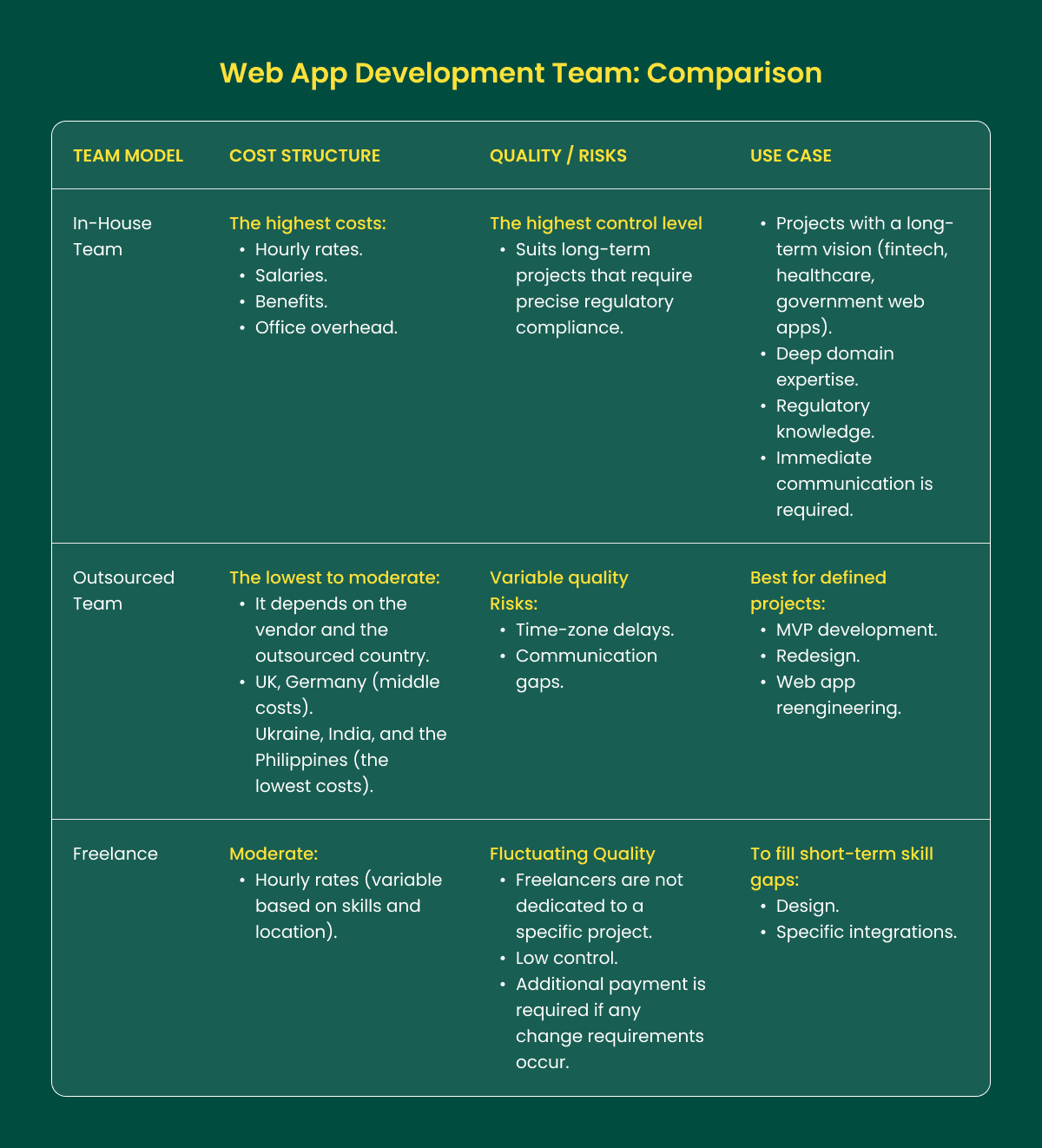
It’s important to organize communication to avoid any misinterpretations, highlight roadblocks, and ensure timely reporting. Implementing Agile frameworks like Scrum or Kanban means organizing development in short iterative cycles, enabling any alterations if needed. Then, the PM will summarize the progress in a weekly or biweekly calls.
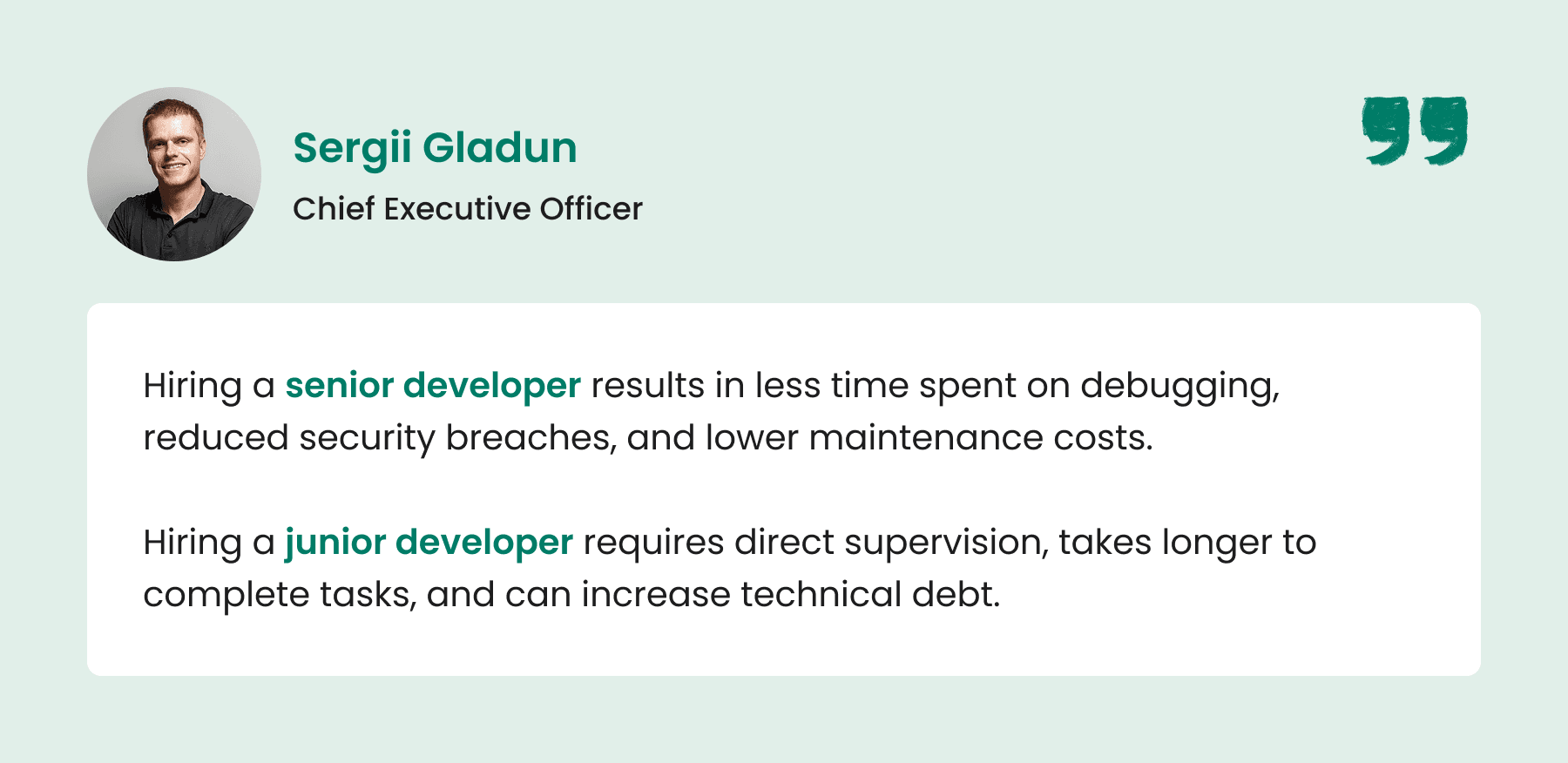
Additionally, when it comes to seniority level expertise, the low-cost service is a tempting proposition. Nevertheless, it introduces a set of challenges.
Plan for Scalability from the Start
In order to save costs, pay attention to the architectural design of the app; don’t jump into a complex and expensive microservices architecture. Instead, start from a well-thought-out monolith built by applying distinct, self-contained modules for different functions.
From a cost perspective, this approach is critical as when the web app needs further scalability, developers can easily separate high-traffic modules like payments or login into independent microservices. This method preserves the budget by bypassing costly reorganization of the weakly structured applications from scratch when growth occurs.
Summary
A web application development budget requires an in-depth analysis of the complexity characteristics, business size, and strategies for cost optimization. MVP development and open-source technologies can be helpful to optimize costs and accelerate development time without compromising the quality. Finally, choosing an outsourcing or freelancer partner represents a critical factor for web app quality.
 Interested in crafting a custom or basic web app? We’re ready to help!